
Instruments available at SAIF

  • C-H-N Analyzer

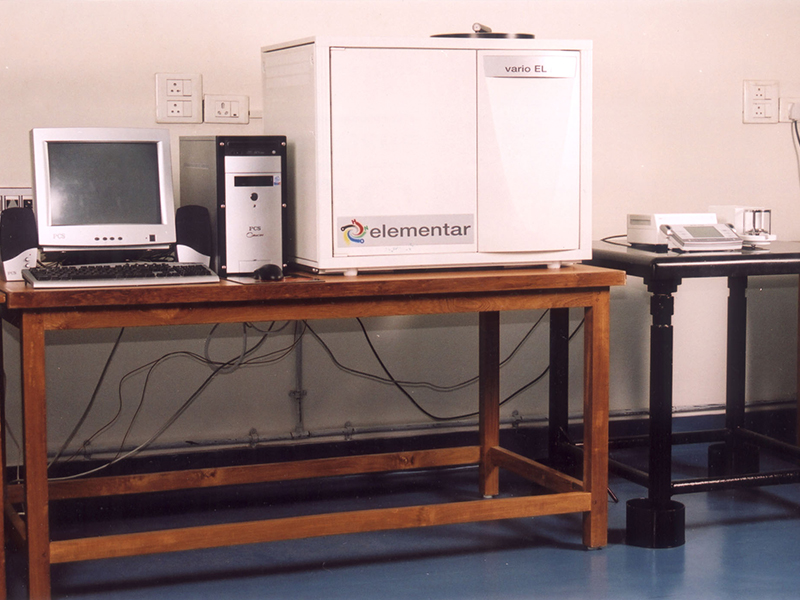
    The percentage of elements C, H, N, S and O in an organic compound can be individually or simultaneously analyzed over a wide range of sample matrices and concentrations with this instrument

    Make/Model

    :

    Elementar Vario EL III

    Operation Modes

    :

    CHNS, CHN, CNS, CN, N, S and O

    Detection Ranges* C

    :

    0.004 – 30 mg abs (or 100%)

    H

    :

    0.002 – 3 mg abs (or 100%)

    N

    :

    0.001 – 10 mg abs (or 100%)

    S

    :

    0.005 – 6 mg abs (or 100%)

    O

    :

    0.005 – 2 mg abs (or 100%)

    *Depending on samples

    :


    Standard deviation

    :

    0.1% abs

    Sample weight

    :

    0.02 mg up to approx. 1 gm

    Digestion temperatures

    :

    950 – 1200°C


    This instrument is ideally suited for research, quality control and  quality assurance applications.  Wide range of applications such as analysis of chemicals, pharmaceuticals, synthetic materials, coals, oils and derivatives, geological substances, agricultural products, environmental products etc are met with this instrument.

    Samples must be non-fluorinated, non explosive, about 1 gm for solid sample or 25 ml for liquid sample (depending on the components)

  • Fourier Transform Infra Red spectrometer (FTIR)
     
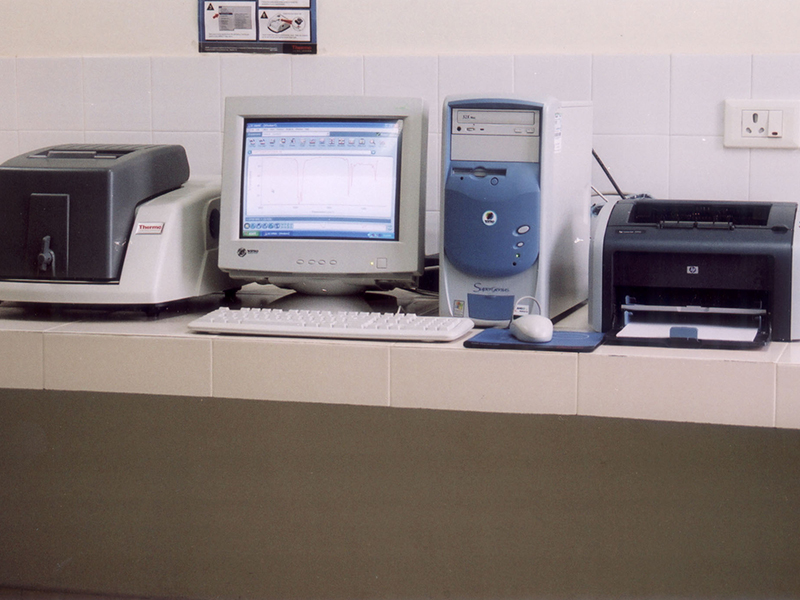
    Atoms or atomic groups in molecules are in continuous motion with respect to one another. They vibrate about some mean position. IR spectrum of a compound is the superposition of absorption bands of specific functional groups. The subtle interactions with the surrounding atoms or molecules impose the stamp of individuality of the spectrum of each compound.  IR absorption has numerous applications in qualitative and quantitative analysis.

    Make/Model

    :

    Thermo Nicolet, Avatar 370

    Spectral range

    :

    4000-400 cm -1

    Resolution

    :

    0.9 cm –1

    KBr beam splitter

    DTGS Detector (7800 – 350 cm-1)

    HATR Assembly for convenience of measurement.

    Database for identification of unknown compounds

    Solid / liquid samples about 5 mg.  Solvent should be specified for measurement  in solution phases

  • Gas Chromatograph / Mass Spectrometer (GC/MS)

    Gas Chromatography is the ideal technique for the separation of thermally stable and volatile compounds. The separated compounds are converted to ions in the mass spectrometer and are separated according to mass to charge ratio. The mass spectrum is plotted as detector output against mass

    Make / Model

    :

    Varian 1200 L Single Quadrupole

    Mass Range

    :

    10-800 u

    Scan mode

    :

    Centroid

    Carrier gas

    :

    Helium

    Resolution

    :

    Unit mass over entire range

    Library

    :

    NIST Library

    Column Specifications

    :

    Column type – WCOT fused silica
    Stationary phase – VF – 5MS
    Column length – 30m

    Maximum temp

    :

    325°C

    The applications of this instrument include Qualitative and quantitative determination of molecular species in organic and biological samples, concentration of elements in inorganic samples, separation and identification of unknown compounds, trace analysis and determination of isotopic contents, analysis of herbicides, pesticides, nitro compounds, structural information about molecules etc.

  • Inductively Coupled Plasma Atomic Emission Spectrometer (ICP-AES)

    The atomic spectrum emitted by a sample is used to determine its elemental composition in this instrument. The wavelength at which emission occurs identifies the element, while the intensity of the emitted radiation quantifies its concentration.

    Make/Model

    :

    Thermo Electron IRIS INTREPID II XSP DUO

    Flexible axial and radial view instrument, with high concentration capabilities.

    Spectral range

    :

    165 to >1000nm

    Resolution

    :

    0.005nm at 200nm

    Detection limit

    :

    ppb level

    CID Detector


    Microwave Digestor (Milestone) available for sample digestion.

    The applications of this instrument are in elemental level analysis of environmental samples, pharmaceuticals, research samples, soil and fertilizers, etc.
     
    5 - 10 ml of aqueous solution required for analysis.  Elements to be determined are to be clearly specified

  • Thermal analysis system - TG/DTA

    Thermogravimetric Analysis (TG) determines the weight changes of a sample, whereas Differential Thermal Analysis (DTA) measures changes in temperature between a sample and a reference, as a function of temperature or time.

    Make/Model

    :

    Perkin Elmer, Diamond TG/DTA

    Temperature range

    :

    Ambient – 1200°C

    TG Measurement Range

    :

    200 mg

    TG Sensitivity

    :

    0.2 mg

    DTA measurement Range

    :

    ±1000mV

    DTA Sensitivity

    :

    0.06mV

    Programmable rate

    :

    0.01 – 100°C / min

    Sample pan volume

    :

    45ml or 90ml

    Atmosphere

    :

    Air, inert gas, Oxygen

    Pure gas flow rate

    :

    0-1000 ml/min

    Balance

    :

    Horizontal differential type

    Applications of the TG/DTA instrument are compositional analysis, decomposition temperature, oil volatility measurements, flammability studies, heat of transition, thermal stability analysis, oxidative stability analysis, transition temperature detection etc.
     
    Non-explosive, non-corrosive samples about 10mg are required for analysis. Please avoid samples contain Nitrates.

  • Thermal analysis system –DSC

    DSC (Differential Scanning Calorimetry) measures the amount of heat energy absorbed or released by a sample, as it is heated, cooled or held at a constant temperature

    Make/Model

    :

    Mettler Toledo DSC 822e

    Temperature Range

    :

    -150 °C to max. 700°C

    Measurement range

    :

    ± 350 mW at RT

    Measurement resolution

    :

    0.04 mW at RT

    Temperature Accuracy

    :

    ± 0.2°C

    Temperature reproducibility

    :

    ± 0.1°C

    Heating rate

    :

    RT to 700°C in 7 min

    Cooling rate

    :

    + 100°C to - 100°C in 15 min

    Sampling rate

    :

    Max 10 values / sec

    The applications of DSC are numerous, either for routine quality control measurements or in research, where high sensitivity and flexibility are important aspects. Investigations can be carried out on samples like polymers, pharmaceuticals, chemicals, liquid crystals, food samples, glasses etc.
    Applications include study of melting behavior, glass transition, specific heat anomaly, oxidation stability, chemical kinetics etc.

     Non-explosive, non-corrosive samples, about 10-50 mg. are required for analysis.

  • UV-Vis-NIR Spectrophotometer

    The optical absorption by samples in the ultraviolet, visible and near infrared regions are measured with this instrument.  Near IR spectroscopy is a valuable tool for analyzing aromatic mixtures.  This region finds wide acceptance in  food and grain industry for the determination of protein, fat, moisture, sugar, etc.  Absorption measurements in the UV and visible regions provide information about electronic transitions in a sample

    Make/Model

    :

    Varian, Cary 5000

    Spectral range

    :

    175 – 3300 nm

    Wavelength accuracy

    :

    ±0.1nm (UV-Vis), ±0.4nm (NIR)

    Wavelength reproducibility

    :

    0.025nm

    Limiting resolution

    :

    0.05nm(UV-Vis), 0.2nm(NIR)

    Base line correction, repetitive scans, concentration modes etc. available

    The applications of this instrument include overtone analysis of X-H containing molecules (X=C, O, N, Si), determination of hydrogen bonds, energy gap measurements in solids, study of molecular structure, concentration measurements etc.
    Solid/liquid samples up to 100mg/ml. are required for analysis.  Thin film samples on glass or quartz substrate required. Solvents should be specified for solid sample analysis in the NIR  region.

  • X-ray Diffractometer.

    X-Ray Powder Diffractometry is the most powerful and established technique for material structural analysis, capable of providing information about the structure of a material at the atomic level.

    Make/Model

    :

    Bruker AXS D8 Advance

    Configuration

    :

    Vertical, Theta/2 Theta geometry

    Measuring circle diameter

    :

    435, 500, and 600 mm predefined

    Angle range

    :

    360°

    Max. Usable angular range:

    :

    3° to 135°

    Smallest addressable increment

    :

    0.001°

    Max. angular speed

    :

    30°/s

    X-ray source

    :

    Cu, Wavelength 1.5406 A°

    Detector

    :

    Si(Li) PSD


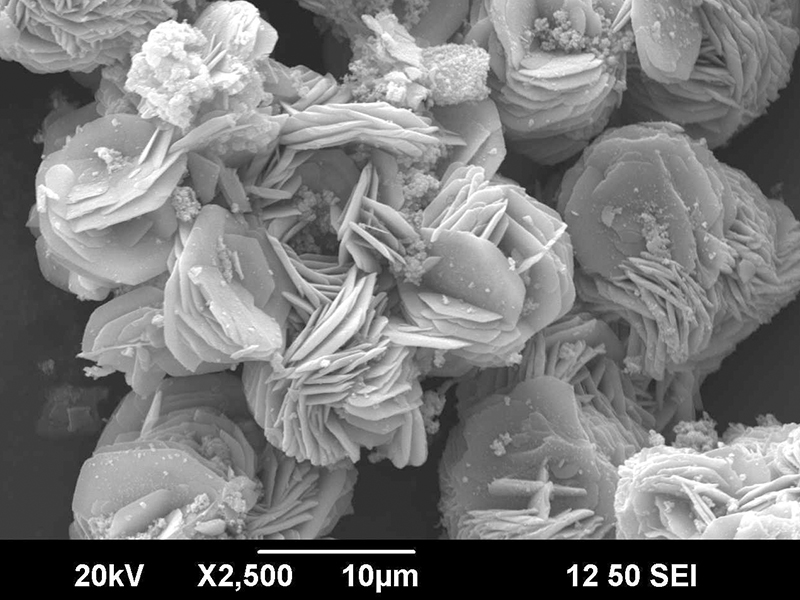
    The D8 Advance X-ray Diffractometer can be used for all X-ray powder diffraction applications such as structural analysis of crystalline
    solids, determination of unit-cell parameters, determination of crystal morphology etc.
    Solid Samples, ~ 1 gm, are required for analysis.  Sensitivity to moisture, air etc are to be specified


    Milli-Q Gradient Ultrapure Water
     
    This is for the information of all concerned that Milli-Q Gradient Ultrapure water purification system is now installed in STIC.  This Milli-Q Gradient  Ulrapure water  has the following specifications:
     
    Resistivity at 25°C : 18.2 Mohm-cm
    TOC Level : 1-5 ppb
    Bacteria : <1cfu/ml
    Particulates > .22 µm : <1p/ml
    UV absorbance : .0001 AU
     

    Those who are interested can get this water from STIC on payment basis.  The prices will be as follows :


    1.  Users from CUSAT and other academic institutions           : Rs. 250/lit

    2.  Other users                                                                     : Rs. 500/lit

     
    Users who come to collect water should bring their own ultra clean vessel for the same.
     
    Users are urged to confirm availability of water before coming to collect the same.
     

    Liquid Nitrogen Generator

    STIC  has procured a Liquid Nitrogen Generator as a support facility for instruments in SAIF. Some of the instruments procured in SAIF need liquid nitrogen for their operation.  Excess liquid nitrogen produced by the generator are supplied to external users on payment basis.

    Make/Model  :   Iwatani Model NL 50
    Capacity     :  15 Litres per day

    System consist of a nitrogen gas generator (Model GN – 10A) a nitrogen liquifier and a built in storage tank of capacity 40 Litres.  This is a water cooled system.

    Liquid Nitrogen has a wide range of applications as coolant for thermal analysis instruments, biomedical instruments, storage of specimen, cryostats etc.

    Procedure for using the chemical / Material Analysis Facility (SAIF)

    Samples for analysis, along with details of analysis to be carried out and Demand Draft may be sent to The Director, STIC, Cochin University of Science & Technology Cochin 682 022.   The payment should be made by a crossed DD drawn in favour of The Director, STIC , Cochin 682 022 payable at Ernakulam.   Payments can also be made by cash in the office of STIC.  The results will be sent to the user only after receiving payments.

    Samples should be submitted separately for each analysis (except thin films). Samples should be packed well in airtight vials.  

    For efficient use of the facility, users are requested to comply with the following.

    • Be specific with respect to the nature of measurements/ analysis to be made, indicating solvents, temperature range and other details, if any.
    • For measurements in person, inform us well in advance and start the trip only after getting appointment
    • Complaints regarding the measurements should be brought to the notice of Director, STIC immediately after the receipt so that corrective action can be taken.
    • Acknowledge the services rendered by SAIF in all your publications and thesis to expose the facilities to other users.
    • Send us a copy of your reprints (involving measurements done at the SAIF) and such documents as thesis (only acknowledgement section), reports etc for reference to other users.
    • Write to us about the requirements of a new facility, which will have sufficient utility for workers in this region of the country.  User suggestions are discussed at the FMC meeting for recommendation to DST for funding.
    • Expose your colleagues and friends in other institutions about the facilities available in SAIF, Cochin so as to enlarge our user – base.

    Any special help, other than routine analysis, will be treated as constancy service for which charges will be extra.


Site Designed & maintained by Accudata Networks Pvt. Ltd.