
Mechanical Calibration

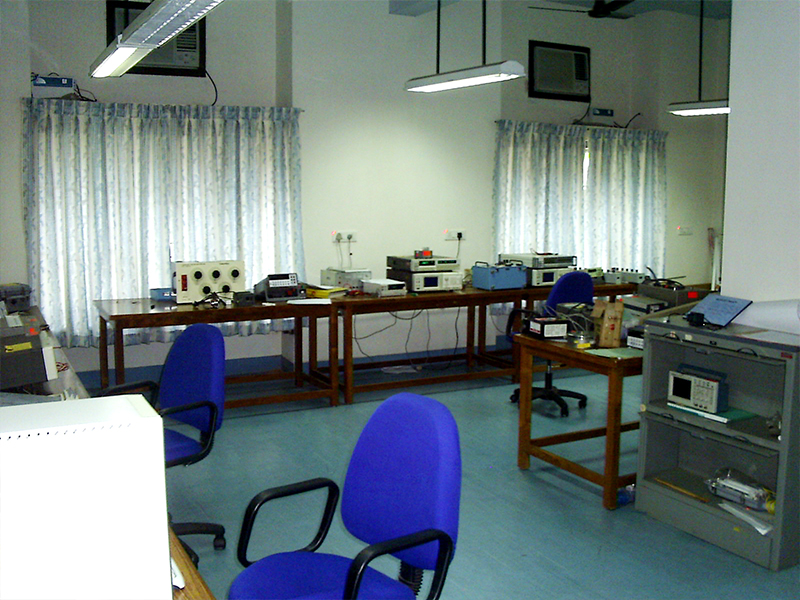
STIC is accredited by NABL for Mechanical Calibration. The Mechanical calibration laboratory is equipped with high accurate E1 class weight, F1 class weights, precision Balances Dead Weight Tester Prieumatic/Hydyaulic Pressure Calibrators

Calibration Capability-Mechanical

Quantity

Range
             Pressure              0 to 600kg/cm2
             Vaccum              -0.9 to 0bar
Weight
             E1 Class              1mg to 1kg
             F1 Class              5kg to 40kg
Weighing Balance
             E1 Class              0 to 210g
             F1 Class              0 to 40kg


E1 class weights 

Traceable weighing results require traceable mass standards. Our E1 class weights satisfy OIML R111 (International organization on legal Metrology) recommendations. The use of appropriate mass weight and their correct treatment at all times is essential to mass metrology. Our E1 class weights have got treaceability to NPL, New Delhi.  Their range is from 1 mg to 1kg.

Range: 1mg to 1kg (Stainless steel weights)
Accuracy: E1 class
Traceability: NPL, New Delhi.

F1 class weights 

Range: 1mg to 40kg (Stainless steel weights)
Accuracy: F1 class
Traceability: National Standards

Precision Electronic Balance

Make: Sartorius
Range: 1mg to 210g
Resolution: 0.01mg
Traceability: National Standards

Electronic Mass Comparator

Make: Sartorius
Range: 1g to 60kg
Resolution: 1mg
Traceability: National Standard

Oil Dead Weight Tester

Dead weight testers are the basic primary standard used for accurate measurement of pressure. No other equipment can match the stability. It is ideal for calibrating pressure gauges, transducers, digital calibrators etc. and can also be used to directly measure the pressure in system and processes when precision reading is important. The calibration Techniques is cross-floating method.

Make: Ravika
Model: REW 304I
Sl.No: REE 065
Range: 1kg/cm2 to 600kg/cm2
Accuracy: 0.03%of reading
Traceability: National Standards

Pneumatic Pressure Calibrator 

Portable calibrators are the powerful range of instrument providing optimum features combination for measurement of pressure at accuracy of 0.025% of FS. A brief description of instrument is given below
Type: Pneumatic Pressure Calibrator
Range: -1 to 20bar
Accuracy: 0.025% of FS
Traceability: National Standard

Hydraulic Pressure Calibrator 


The PPS40 has been developed to provide an accurate, portable pressure calibration instrument for use on site or in laboratory/ workshop.
Type: Hydraulic Pressure Calibrator
Range: 0 to 100bar
Accuracy: 0.025% of FS
Traceability: National Standard


Comparison Test Pump & Standard Pressure Gauges

 The bourdon type gauges are calibrated by direct comparison method against the reference bourdon gauges depending upon the accuracy and the range of gauges to be calibrated. We have two ranges of reference bourdon gauges.

  • Type:  Standard Pressure gauges

Range: 0 to 100kg/cm2
Make: Budenberg
Accuracy: 0.20% of FS

  • Type:  Standard Pressure gauges

Range: 0 to 600kg/cm2
Make: Budenberg
Accuracy: 0.25% of FS

Material Testing

Universal Testing Machine


Universal Testing machine is electromechanical machine with digital display of load & displacement and have system for changing speed. The machine is design for testing various materials like plastics, cable, leather and metals.  Tension and compression can be performed on this machine with suitable grip and fixtures.


The main features are

  • Selection of different speed
  • Facility to mount different load cells
  • Facility to mount different grips and fixtures for different test and materials.
  • Digital display of load and displacement
  • Storage of important parameters such as peak load, breaking load and max. Displacement.
  • Facility to return of cross head to home position for next tests.

A brief description f the machine is
 Make/Model: Unitek 9400
Capacity: 10 tonns with 12mm dia.

Hardness Testing Machine

Hardness is defined as “ Resistance of metals to plastic deformation usually by indentation”. It is a property of a metal, which gives it the ability to resist being permanently deformed (bent, broken or have it shape changed) when load is applied. The greater the hardness of metals the greater the resistance it has to get deformed.

A brief description of the machine is
Type: Vickers cum Brinell hardness testing machine
Make: Techno Instruments
Model: BV 250
Range: 5kg to 250kgf


The main features of the machine is

  • Testing range is very wide, from soft metals such as lead up to the hardest, like hardened steel.
  • Thin sheet metals is perfectly tested because the load applied is very small.
  • Same hardness number is obtained on the same specimen, regardless of load applied.

Fatigue Testing Machine

Fatigue Tests are made with the object of determining the relationship between the stress range and the numbers of times it can be applied before causing failure. Testing machine are used for applying cyclically varying stress. This is a rotating beam type Machine in which load is applied in reverse bending fashion. The standard 8mm dia specimen is held in the specimen holder.


A brief description of the machine is

Type: Fatigue Testing machine
Make: Techno Instruments
Model: FTG-8 (D)
Max. Bending moment: 200kgcm
Testing dia:     8mm

The features of the machine is

  • Simple lever system of changing load.
  • The bending moment is applied with a lever system and can easily be changed by moving a weight over the lever.
  • A digital counter records the total number of revolution at which the specimen fails

Rotational Viscometer

Viscosity is a physical property of fluids that cause them to resist flowing because of the internal friction created as the molecules against each other. Viscosity can be thought of “thickness of fluid”. Viscosity is a parameter, which directly related to the velocity of flow of liquid.  Viscosity is express in terms of rotational speed of a disc rotating inside the liquid.


A brief description of the machine is

Type: Rotational Viscometer
Make: Brookfield
Model: LVDV-E
Range: 1cps to 2Mcps
Accuracy: +-1% of reading

Viscosity of a liquid will with temperature of the fluid. Hot oil is “thinner” than cold oil. So it is very important to know the temperature of the fluid at which the viscosity is measured.

Temperature range:  0 to 150ºC

The main feature of the machine is

  • Direct display in  Cps or m.Pa.S. No calculation required.
  • 18 speeds  for greater range capability.

Applications.

  • Biological Fluids                                                                      
  • Chemicals
  • Cosmetics
  • Dairy Products
  • Hot wax
  • Juices
  • Oils
  • Paints and coating
  • Pharmaceuticals
  • Photo Resist
  • Polymer solution.
  • Rubber solution
  • Solvents.

RPM Measurement

Range: 0 to 5000rpm.
Traceability: National Standard


Site Designed & maintained by Accudata Networks Pvt. Ltd.